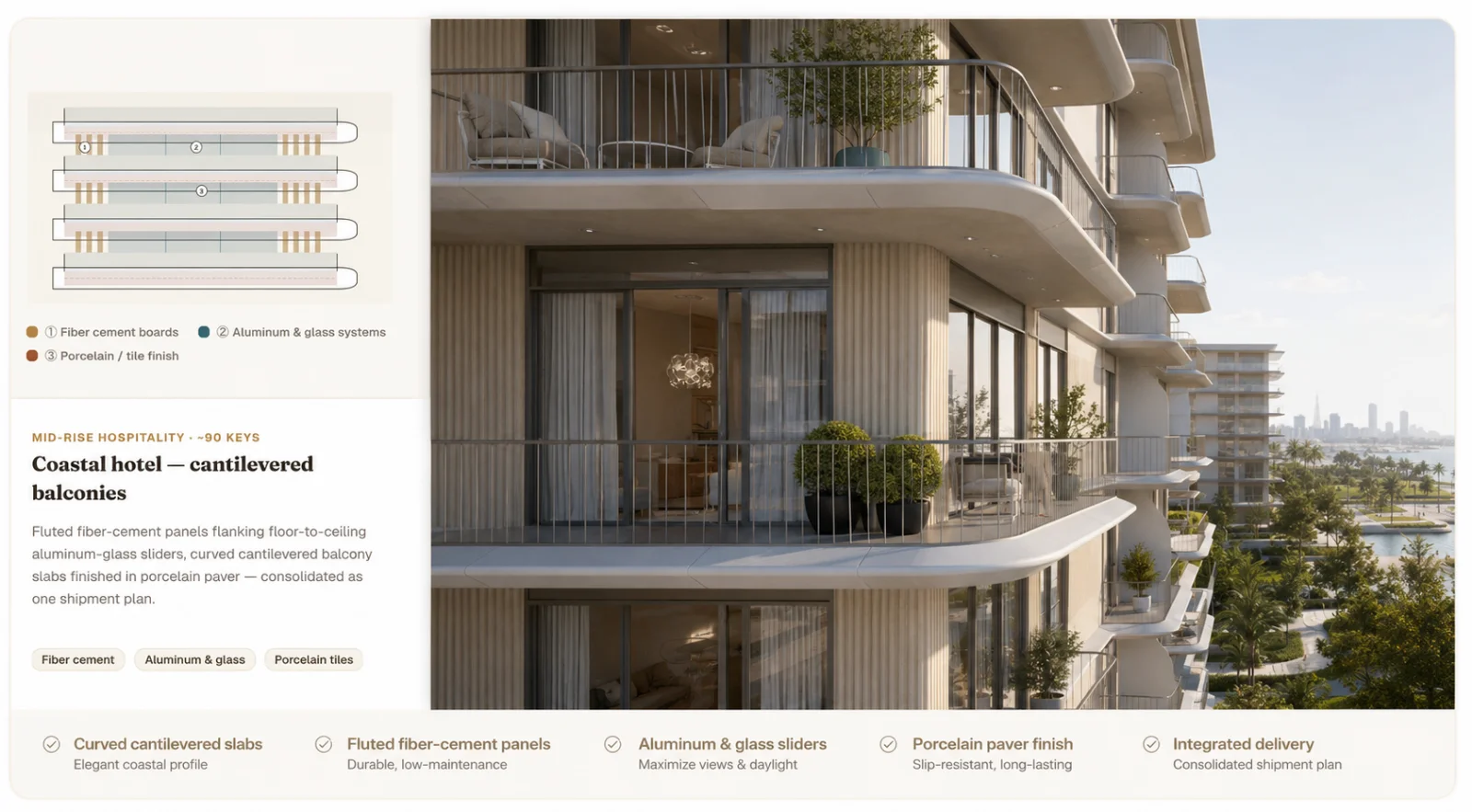
Mid-rise hospitality · ~90 keys
Coastal hotel — cantilevered balconies
Fiber cementAluminum & glassPorcelain tiles
Matching collection →
Field notes
Two typical packages we consolidate, shown as concept drawings — locations and identifying details are withheld out of respect for client privacy.
Mid-rise hospitality · ~90 keys
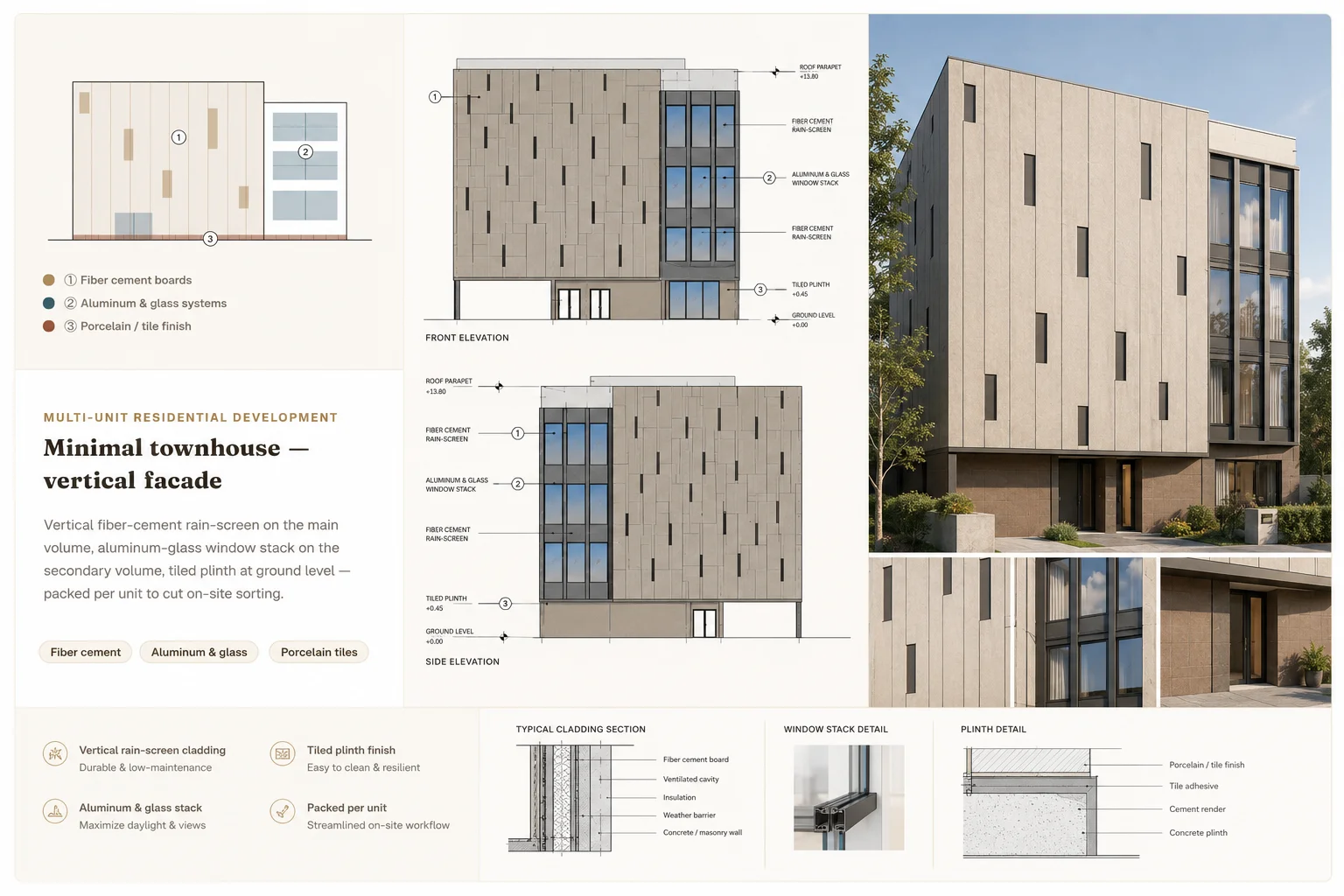
Multi-unit residential development
Composites
Three engagements we see over and over. Details are composites of real enquiries — anonymized and combined to protect client privacy.
Where they were stuck
Four months into sourcing, the owner was running eleven separate marketplace conversations — negotiating tile with one factory, vanity tops with another, sanitary ware with a third. Every quote used different terms (EXW vs FOB vs CIF), samples arrived unlabeled, and nobody would say what the landed cost would be after tariffs. Evenings were going to 9pm calls with Asia; the GC was threatening to buy domestic at +40%.
What the desk did
He sent us the finish schedule as one BOM. Our desk matched each line to vetted factories from the internal catalog, normalized every quote to the same basis, ran the duty math per HS line (Vietnamese origin — no Section 301, no AD/CVD exposure), and returned one consolidated proposal in 48 hours: specs, unit prices, lead times, one container plan.
How it ended
One counterparty, one deposit structure, one QC inspection, one vessel. The bathroom package rode in the same container as the tile — freight it would otherwise have paid for itself. The owner's words in the follow-up call: “I got my evenings back.”
Where they were stuck
Benchtops were specified in engineered quartz when Australia's high-silica engineered stone restrictions hit. The QS needed compliant alternatives fast — plus WaterMark and WELS documentation for the full bathroom package, which the incumbent supplier could not produce before the tender deadline.
What the desk did
We proposed two compliant paths side by side — a declared low-silica range and a large-format porcelain pivot — priced both landed with AANZFTA zero duty, and confirmed WaterMark certification and WELS registration for every fixture in the package during vetting, before anything shipped.
How it ended
Tender submitted on time with the porcelain option; certification file accepted by the certifier first pass. The developer now sends every project's wet-area package through the desk as standard practice.
Where they were stuck
A Dubai refurbishment with a hard opening date: the consultant demanded full material submittals — fire certificates, technical data sheets, samples — weeks before the contractor had even settled on suppliers. Sourcing from three countries meant three document formats, and the first submittal round was rejected for inconsistent fire-test evidence.
What the desk did
The desk consolidated the facade and fit-out package to Vietnamese fabricators with existing test evidence, prepared the submittal file the way Gulf consultants expect it (TDS + fire classification + origin documents per line), and sequenced production against the landing planner so the long-lead aluminum started shop drawings first.
How it ended
Second submittal approved without comment. Materials landed in two consolidated shipments matched to the fit-out sequence, and the contractor kept its opening date — and its retention money.
Send the BOM for your current tender and see what one consolidated Vietnamese package does to your material budget.
Send your BOM →